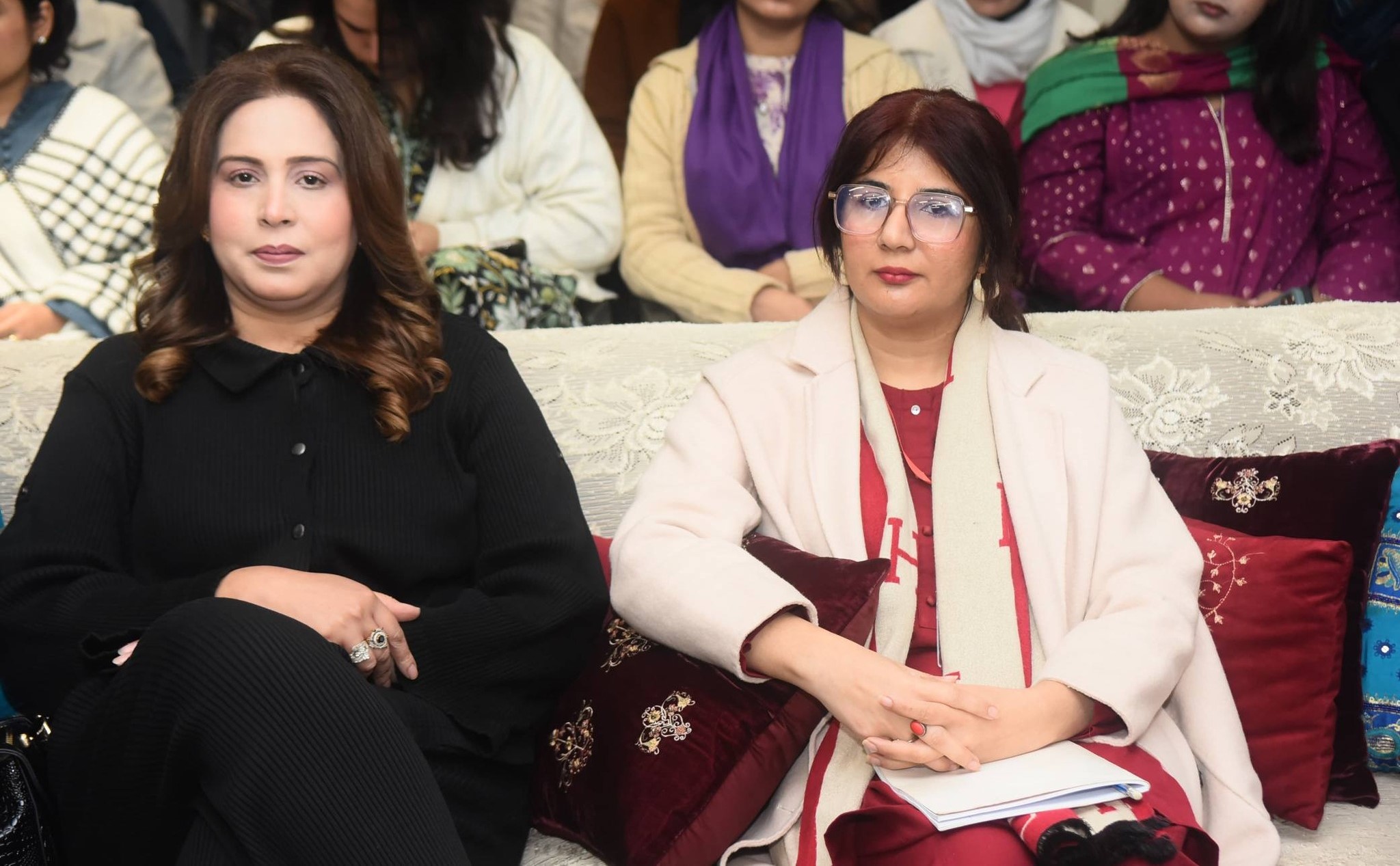

International Symposium on “Trends & Transformation in Politics, Climate Change and Economy: Discourses in South Asia” January 28-29, 2026.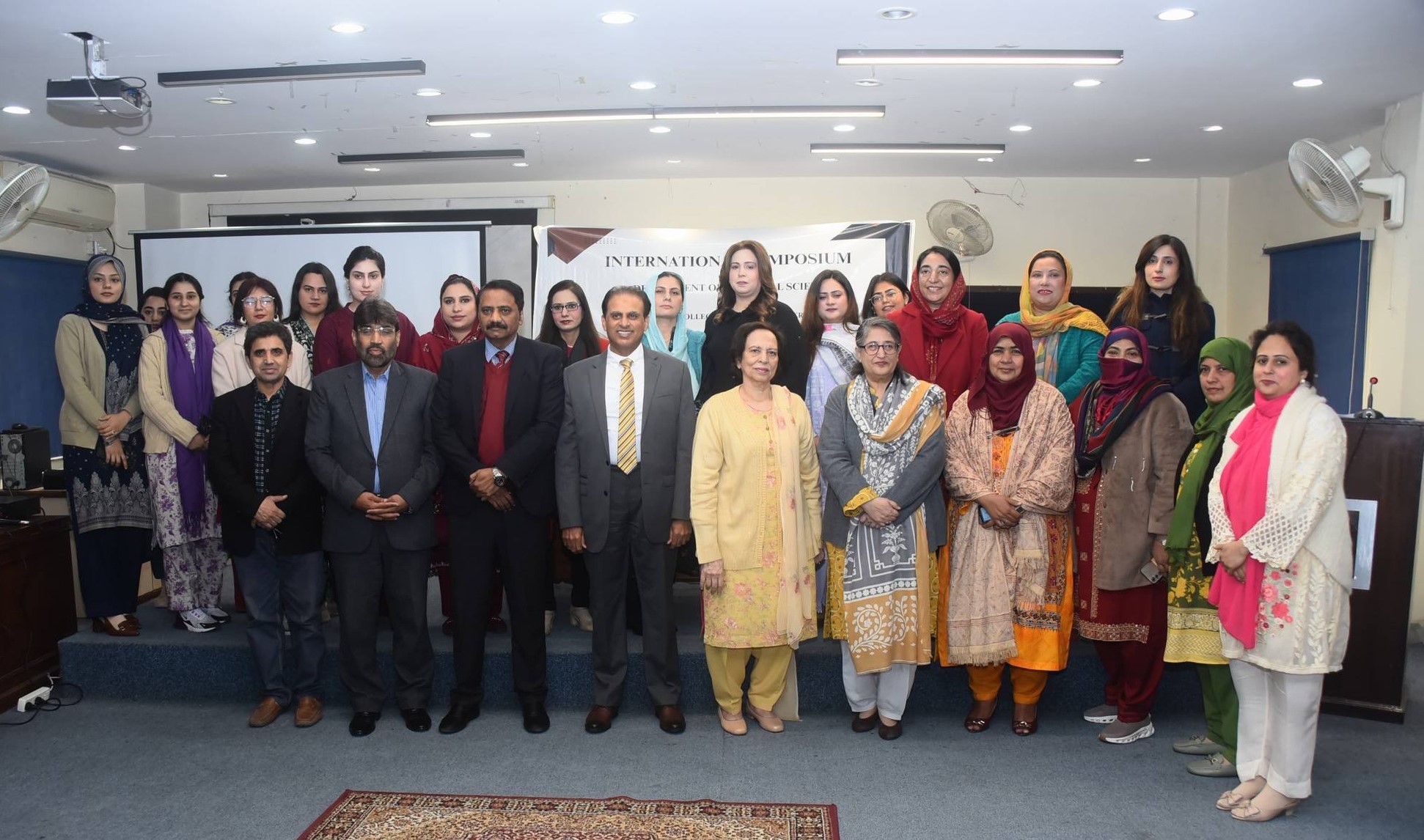
Department of Political Science, LCWU: The first day of the two-days international symposium commenced with a strong academic and intellectual engagement, bringing together scholars, practitioners, and students to deliberate on the evolving political, climatic, and economic discourses shaping South Asia. The symposium aimed to foster critical dialogue on interdisciplinary approaches to regional and global challenges, and socio-economic transformations. The proceedings formally began with the recitation of the Holy Quran, followed by a welcome address by Dr. Aisha Shahzad, Chairperson of the Department of Political Science. 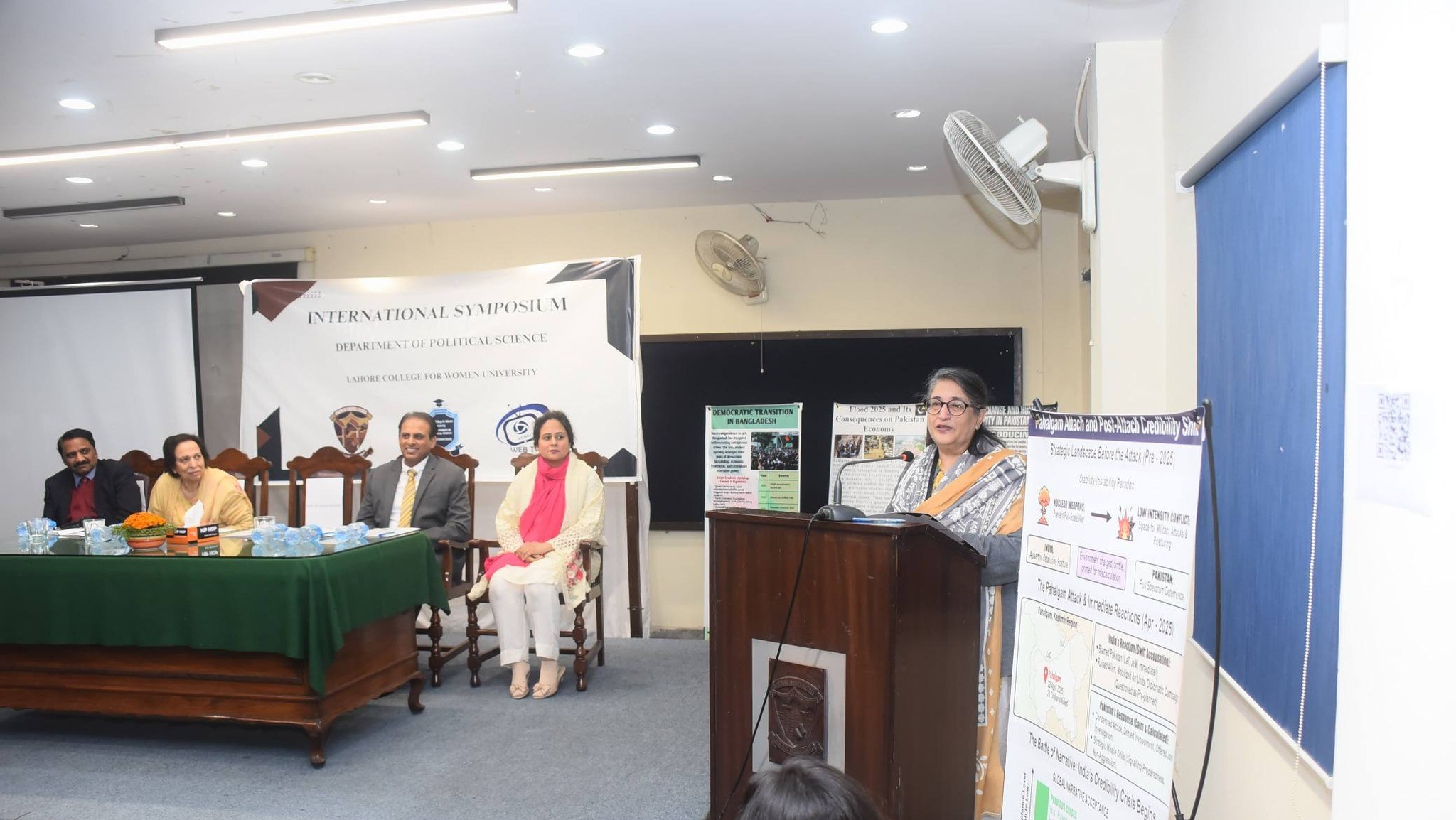 The keynote address was delivered by Prof. Dr. Munawar Mirza, who offered a comprehensive and thought-provoking analysis of the inter-connectedness of climate change, politics, and education. She emphasized that climate change is not merely an environmental concern but a deeply political issue that intersects with governance structures, policy-making, and social inequalities. Prof. Mirza argued that education plays a pivotal role in shaping climate consciousness, political responsibility, and sustainable decision-making, particularly in developing regions such as South Asia. Her address called for integrated policy frameworks that align political will, educational reform, and environmental sustainability.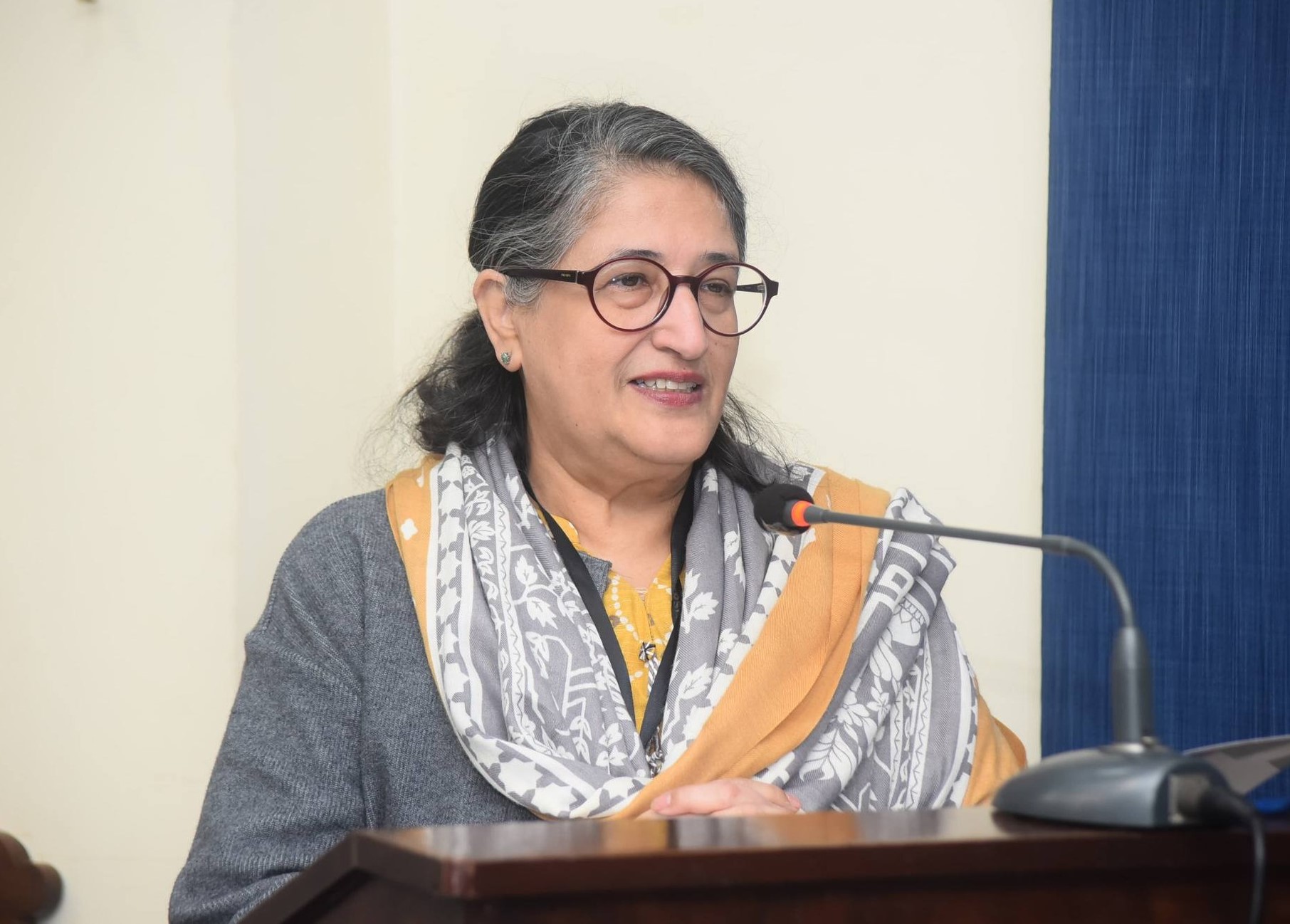
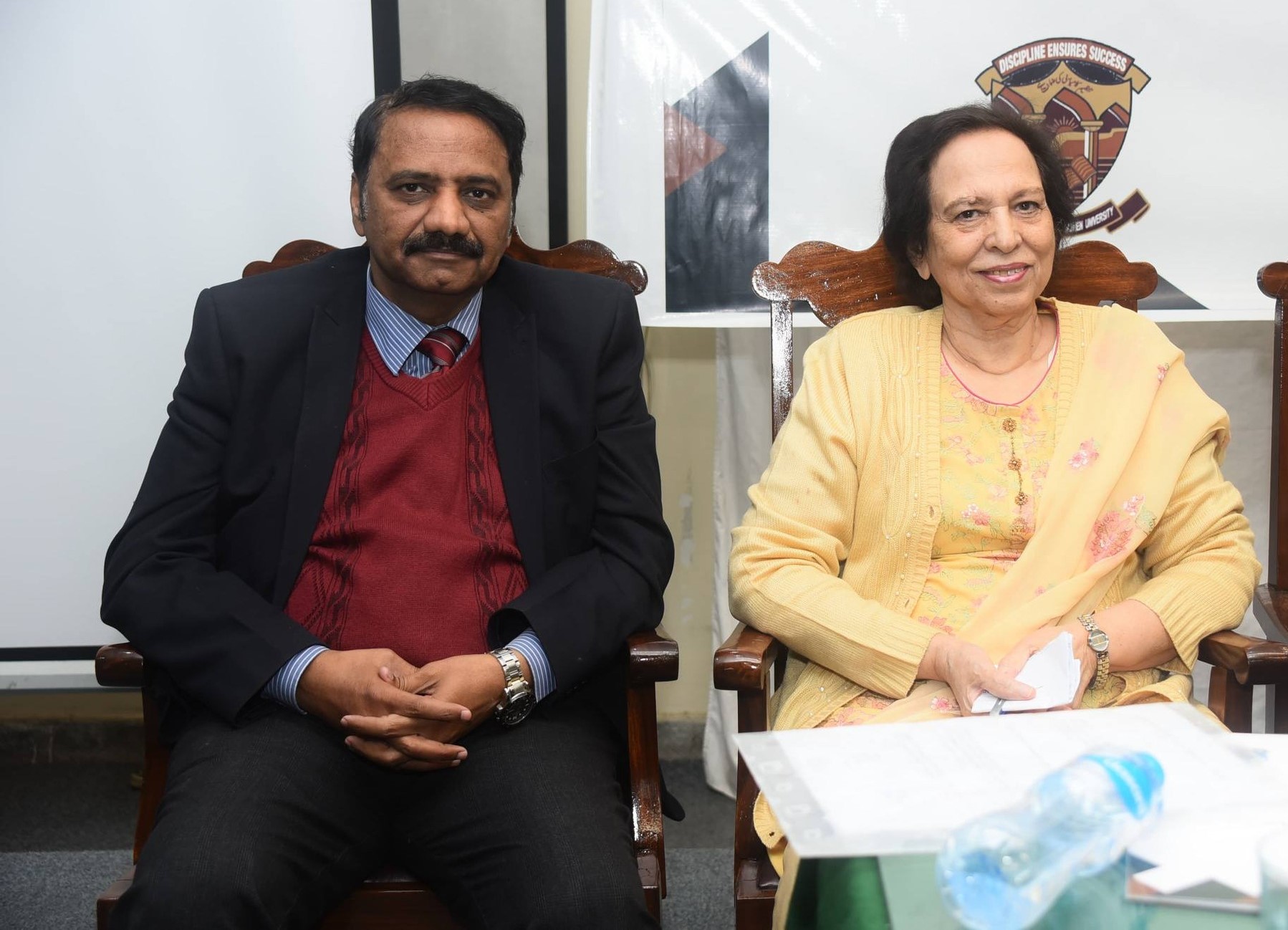 The session further featured a distinguished talk by Mr. Salman Abid, who focused on discourses, consensus-building, and democratic engagement in South Asia. Drawing from his professional experience, he highlighted the role of media, narrative framing, and inclusive dialogue in shaping public opinion and fostering political consensus. Mr. Abid stressed that sustainable democratic practices in South Asia require open discourse, tolerance for diverse viewpoints, and institutional mechanisms that encourage dialogue rather than polarization.Prof.Dr. Rana Eijaz accentuated the significance of such scholarly forums in encouraging critical thinking, interdisciplinary research, and informed discourse on South Asia’s complex political and environmental realities.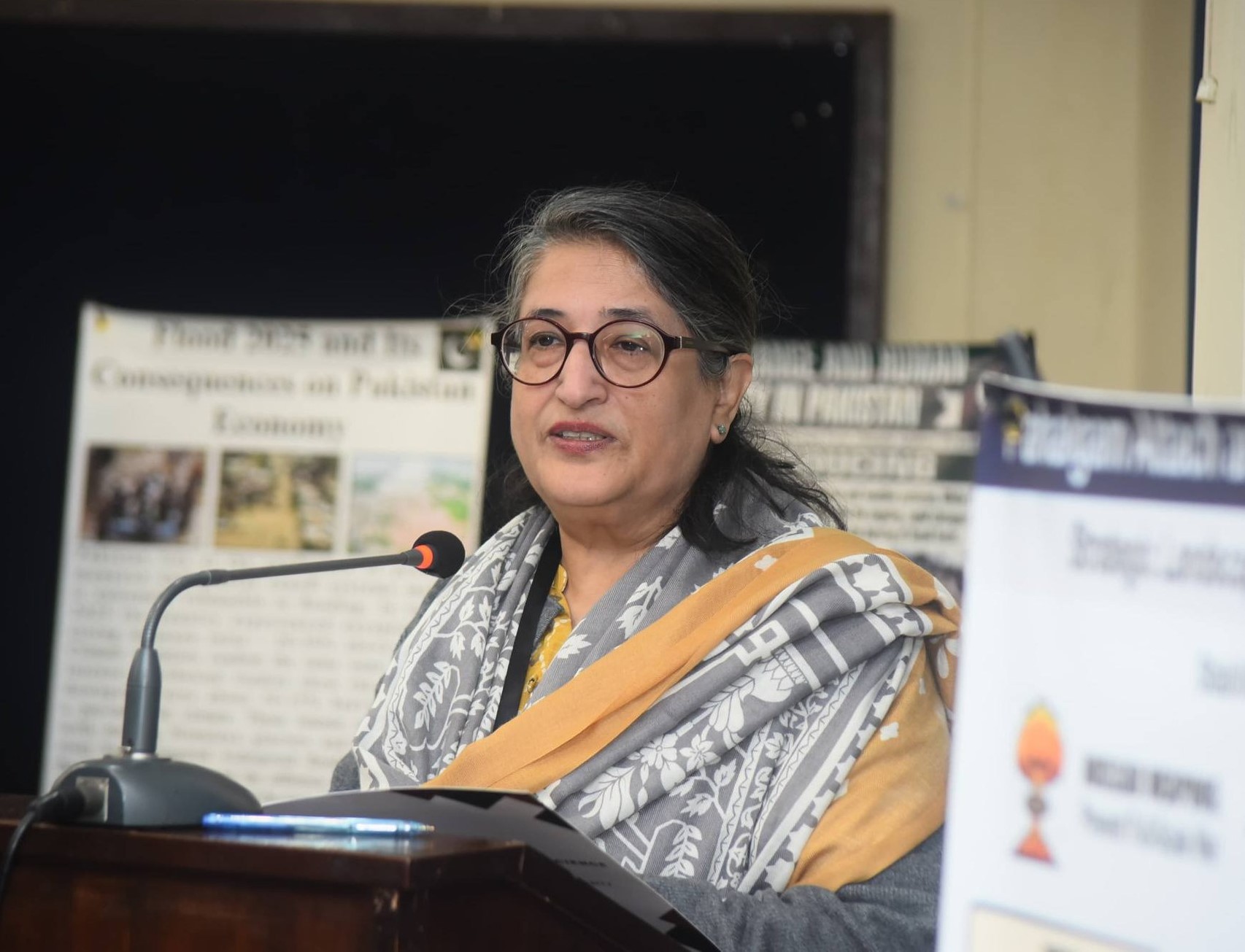
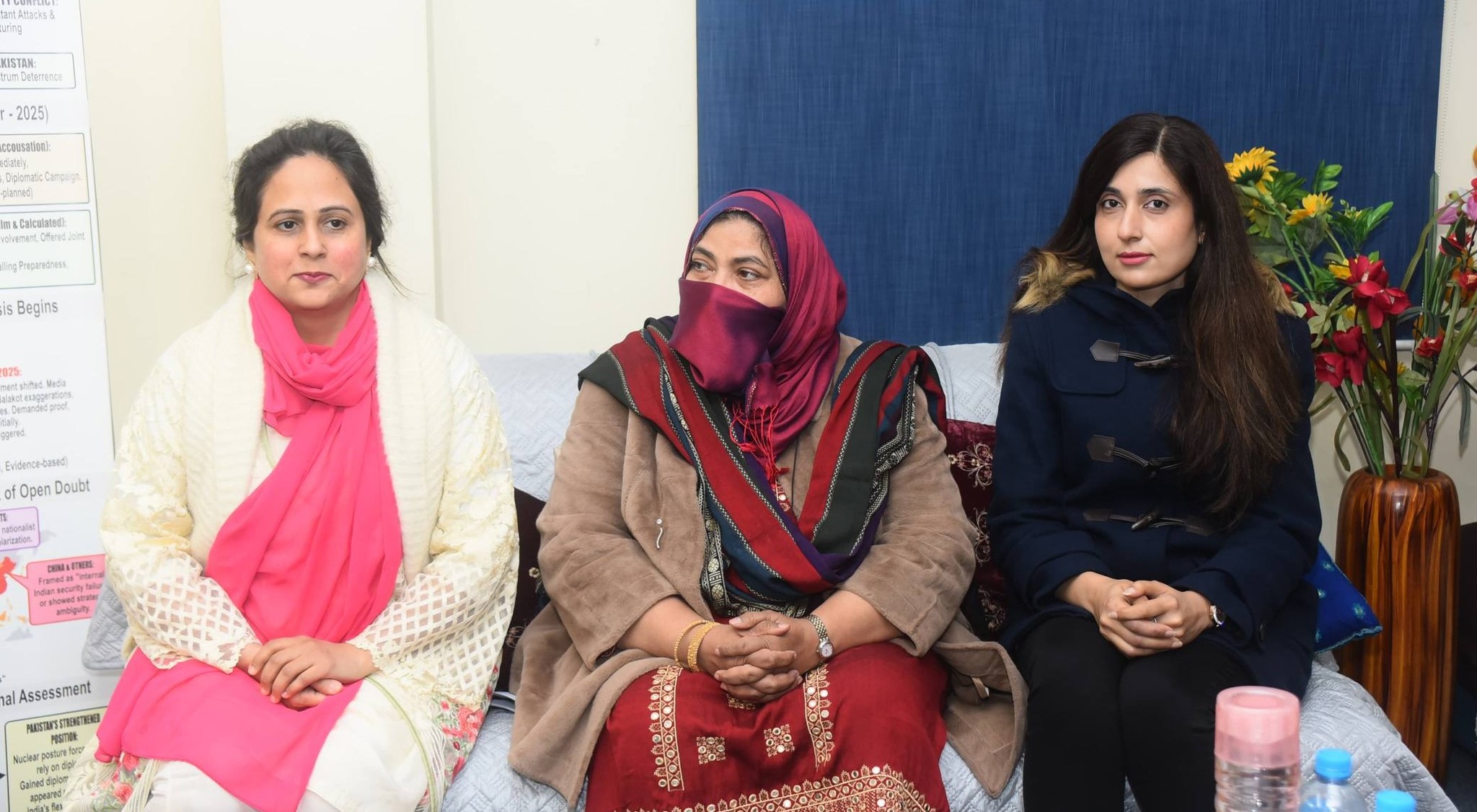 He highlighted the meaningful academic exchange and nurturing research-oriented learning among students.The first day concluded with an address by Prof. Dr. Uzma Qureshi, Vice Chancellor, LCWU. In her remarks, she reaffirmed the university’s dedication to academic excellence, critical inquiry, and research-driven discussions on pressing global and regional issues. She appreciated the efforts of the Department of Political Science in organizing the symposium and emphasized the importance of linking academic scholarship with policy relevance and societal impact. Paper presenters from Kinnaird College, Punjab University, GCU and LCWU impressively shared their research by highlighting the interconnected nature of politics: climate change, education, media, and democratic discourse in South Asia. The sessions encouraged critical reflection, interdisciplinary thinking, and meaningful engagement among participants, laying a strong foundation for the second day of the symposium.